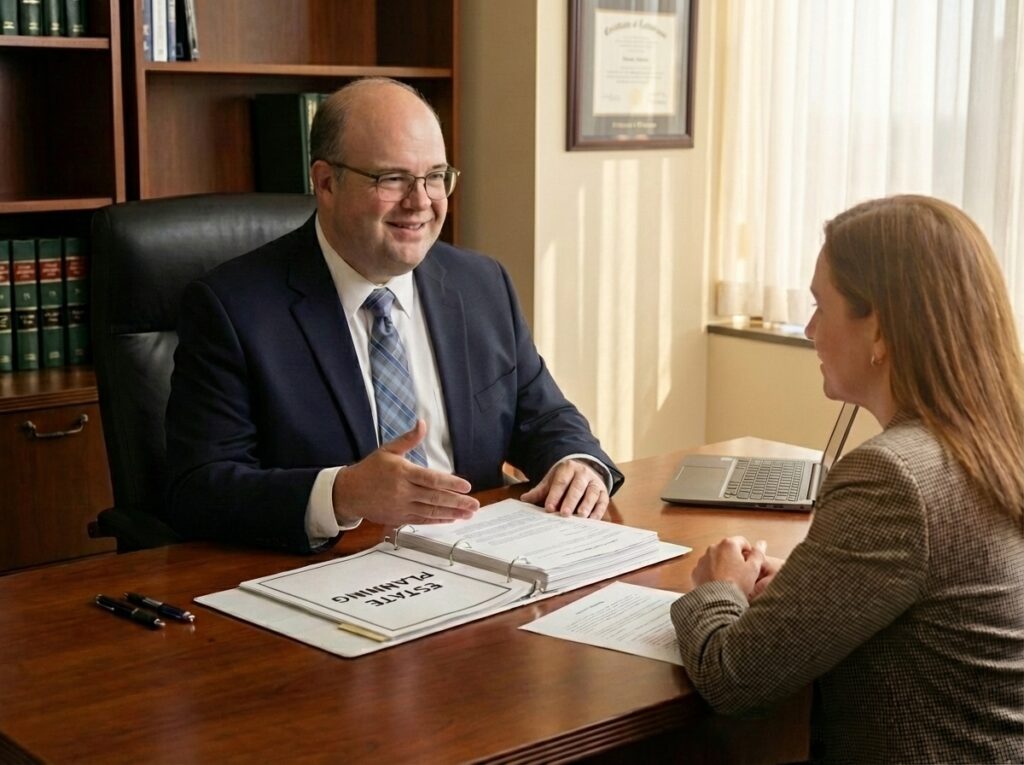
McNaylor Law, LLC helps clients to prepare for the end of life, and assists clients dealing with the aftermath of the death of a friend or family member.
Preparations include planning an individual’s estate. That means working with a client to assess the client’s needs to produce an estate plan. Estate plans include documents such as a durable power of attorney, an advance directive, a will, and may also include a trust. For business owners, end of life planning may also include planning what will happen to the business in the case of the owner’s incapacity and/or death.
Dealing with the aftermath of a death involves leading a client through the complex and unfamiliar grounds of Alabama probate courts. Whether a person died with a will, or without, there are procedures that need to be followed, to see that assets are transferred from one generation to the next and that the deceased individual’s affairs are settled.
Sometimes friends or family members of the deceased believe that there are problems with a will. Sometimes people disagree over who is to receive what. McNaylor Law, LLC is experienced and equipped to help clients when those difficult and trying situations arise.
This is only the barest outline of what is involved in estate planning and probate. For a more detailed discussion of your particular situation, please contact McNaylor Law, LLC to set up an appointment.
Disclaimer: No representation is made that the quality of legal services to be performed is greater than the quality of legal services performed by other lawyers.
Mitchell McNaylor is an Alabama attorney with a diverse and unconventional background that bridges law and history. A cum laude graduate of the University of Florida Levin College of Law, Mitchell has practiced as a solo attorney since 2015, with a practice that primarily focuses on estate planning, probate, and estate litigation. He is also Of Counsel to Blue Spire Law, PLLC.
Before, and alongside, his legal career, Mitchell has been a historian and educator with a particular interest in early modern and modern military history. He holds an M.A. in History from The Ohio State University and has taught American, world, and specialized history courses at the university and community-college level in Louisiana and Alabama. His scholarly work includes articles in the Yale Journal of International Affairs and book chapters on topics ranging from private military companies to eighteenth-century siege warfare, as well as dozens of reviews and encyclopedia entries for reference works.
When not practicing law or researching history, he remains an avid student of strategy, constitutional liberty, and the Western military tradition. As his schedule allows, he also enjoys hunting, sporting clay shooting, and other forms of competitive shooting.

Estate planning is the process of organizing how your assets will be managed and distributed after your death. It involves making critical decisions around wills, trusts, and powers of attorney to ensure your wishes are honored and your loved ones are protected. Having a solid estate plan can help avoid disputes and simplify the management of your estate.
Minimizing estate taxes can be achieved through strategic planning, such as setting up trusts, gifting assets during your lifetime, and ensuring marital deductions are utilized. Consulting with a legal professional can help identify the best strategy for your situation, ensuring your beneficiaries receive more of your estate.
A probate court is a specialized judicial system that handles estate-related matters, including validating wills and overseeing the distribution of assets. The court ensures that the decedent’s wishes are respected and legal processes are followed during the estate settlement.
The duration of the probate process can vary significantly based on the complexity of the estate, any disputes that arise, and the efficiency of the court. Typically, simple estates may take a few months, while more complex cases may extend to a year or more.
Contesting a will is possible under certain circumstances, such as lack of capacity, undue influence, or improper execution. It’s important to have strong evidence supporting your claim, and legal guidance can prove invaluable in understanding your options and navigating the contesting process.
The executor is an individual appointed in a will to administer the estate of the deceased. They are responsible for settling debts, distributing assets to beneficiaries, and ensuring that the will is executed according to the deceased’s wishes.
Choosing guardians for your children is a critical decision when creating your estate plan. Ideally, select individuals who share your values and are capable of providing a stable environment. Discuss your choices openly with potential guardians to ensure they are willing and able to step into this role.
When someone dies without a will, the state takes control of how their estate is distributed. This may not align with what the deceased would have wanted, leading to potential disputes among family members. It’s advisable to create a will to ensure your wishes are followed.
Trusts are legal arrangements that hold assets for the benefit of beneficiaries. They can help avoid probate, reduce estate taxes, and provide more control over asset distribution. Understanding different types of trusts is essential in estate planning to make well-informed choices.
Your estate plan should be reviewed and updated regularly, especially after major life changes such as marriage, divorce, the birth of a child, or changes in your financial situation. Regular updates help ensure your estate plan always reflects your current wishes.
We’re here to support you. Our office is conveniently located to serve your estate planning needs. Feel free to visit us or reach out with any questions.
"*" indicates required fields
For inquiries, please send us an email.
Speak to our team for assistance.
1823 3rd Ave N, Bessemer, AL, 35020
Connect with Mitchell on LinkedIn.